
Product Overview
TL;DR: The PocketBook Era Lite positions itself as an accessible entry point into the premium e-reader market, combining modern display technology with practical features that readers actually use. This 7-inch device leverag…
Table of Contents
- Product Overview
- Key Features & Benefits
- E Ink Carta 1300 Display Technology
- Audio Capabilities
- SMARTlight Adaptive Lighting
- Open Ecosystem & Format Support
- Water Resistance
- Battery Performance
- Pros and Cons
- Advantages
- Limitations
- Who This Product Is Best For
- Who Should Consider Alternatives
- Comparison Insights
- Frequently Asked Questions
- Can I read Kindle books on the PocketBook Era Lite?
- How does the text-to-speech quality compare to Audible audiobooks?
- What does IPX4 water resistance actually protect against?
- How long does the battery actually last?
- Can I organize books into collections or folders?
- Does it support library books from Overdrive?
- What Bluetooth audio codecs are supported?
- Can I read in direct sunlight?
- In Conclusion
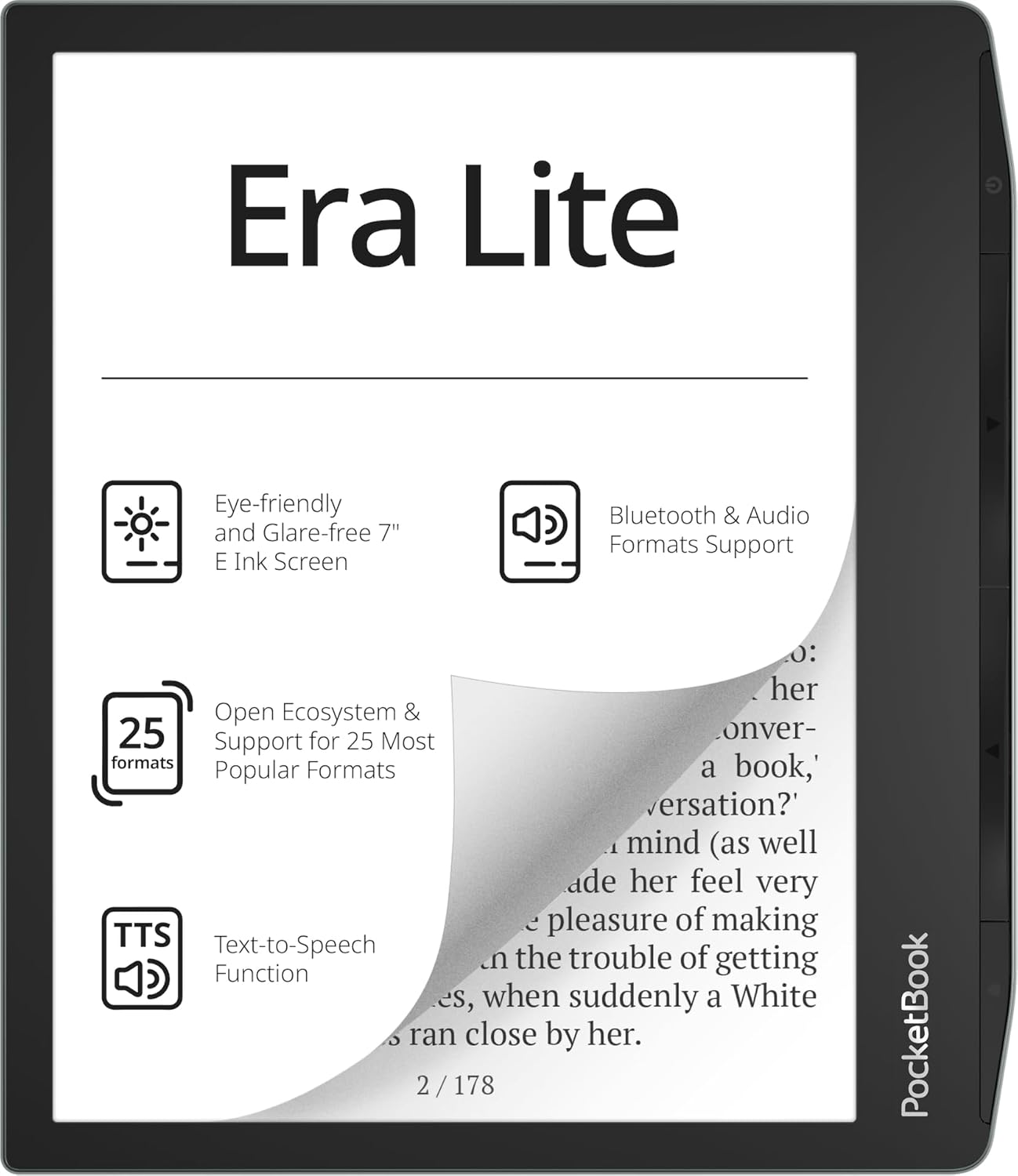
The PocketBook Era Lite positions itself as an accessible entry point into the premium e-reader market, combining modern display technology with practical features that readers actually use. This 7-inch device leverages the latest E Ink Carta 1300 screen technology, which promises improved contrast and a More paper-like reading experience compared to previous generations.
What distinguishes this e-reader from many competitors is its open ecosystem approach. Unlike devices locked to specific bookstores, the Era Lite supports 25 different file formats and allows readers to purchase content from multiple sources. The inclusion of audio capabilities through Bluetooth connectivity and text-to-speech functionality adds versatility beyond traditional reading.
With IPX4 water resistance, adaptive lighting, and claimed battery life extending up to two months on a single charge, the Era Lite targets readers seeking a balance between features and affordability. The pre-installed Libby app integration also signals attention to library users who prefer borrowing over purchasing.
Key Features & Benefits
E Ink Carta 1300 Display Technology
The 7-inch screen utilizes E Ink’s Carta 1300 technology, representing a significant improvement over older Carta generations. This translates to sharper text rendering and enhanced contrast ratios, making extended reading sessions more comfortable. The screen size strikes a practical balance—large enough for comfortable reading without becoming unwieldy for one-handed use or portability.
The paper-like quality of E Ink displays remains the primary advantage over LCD tablets, eliminating eye strain from backlit screens during prolonged reading. This technology reflects ambient light rather than emitting it, closely mimicking the experience of reading printed pages.
Audio Capabilities
Bluetooth connectivity enables wireless audiobook playback through headphones or speakers. This feature transforms the device from a reading-only tool into a more comprehensive content consumption device, particularly valuable during commutes or activities where holding a device isn’t practical.
The text-to-speech functionality deserves particular attention. This feature converts written text into spoken audio, beneficial for accessibility purposes or when multitasking. However, it’s important to understand that text-to-speech uses synthetic voices rather than professional narration, so the listening experience differs from purpose-recorded audiobooks.
SMARTlight Adaptive Lighting
The built-in SMARTlight system allows readers to adjust screen tone from cooler blue-white tones for daytime reading to warmer amber tones for evening use. Warmer light temperatures reduce blue light exposure, which research suggests may interfere less with natural sleep patterns when reading before bed.
This adjustability eliminates the need for external lighting in most conditions, making the device genuinely usable anywhere from bright outdoor settings to completely dark rooms.
Open Ecosystem & Format Support
Supporting 25 file formats represents genuine freedom for readers. The device handles EPUB, PDF, MOBI, AZW, TXT, HTML, RTF, CBR, CBZ, and numerous other formats without requiring conversion software. This compatibility means you can purchase books from any retailer, download library books, or read personal documents without platform restrictions.
The pre-installed Libby app provides direct access to thousands of public libraries, enabling borrowing of ebooks and audiobooks without additional setup. This integration alone can justify the device cost for regular library users.
Water Resistance
IPX4 certification provides protection against water splashes from any direction. While this doesn’t mean you can submerge the device, it does protect against common accidents—reading in the bath, getting caught in light rain, or accidental spills. This rating offers peace of mind without requiring the higher cost associated with full waterproofing.
Battery Performance
The claimed two-month battery life assumes typical reading patterns with wireless connectivity disabled. E Ink technology consumes power primarily when changing what’s displayed, not while showing static text. Actual battery life varies based on backlight usage, wireless connectivity, and how frequently you turn pages, but even conservative use should provide several weeks between charges.
Pros and Cons
Advantages
- Latest screen technology: The E Ink Carta 1300 display delivers noticeably improved contrast and text clarity compared to older e-reader screens
- Platform independence: No vendor lock-in means freedom to purchase content from any source or use library services
- Comprehensive format support: 25 compatible formats eliminate conversion hassles for most content types
- Audio versatility: Both audiobook playback and text-to-speech expand functionality beyond reading
- Practical water protection: IPX4 rating covers common accident scenarios without excessive cost
- Adjustable lighting: SMARTlight adaptation suits different times of day and personal preferences
- Library integration: Pre-installed Libby app streamlines borrowing from public libraries
- Extended battery life: Weeks of use between charges reduces charging frequency concerns
- Portable size: 7-inch screen balances readability with pocket-friendly dimensions
Limitations
- Text-to-speech quality: Synthetic voices lack the nuance and professionalism of recorded audiobooks
- Water resistance limits: IPX4 protects against splashes but not submersion or heavy water exposure
- Screen size constraints: 7 inches may feel small for PDF documents with complex layouts or detailed graphics
- Bluetooth audio only: No built-in speakers means headphones or external speakers are required for audio features
- Learning curve: Users accustomed to closed ecosystems may need time adjusting to managing content from multiple sources
- Processing speed: E Ink displays inherently refresh more slowly than LCD screens, which some users may find initially jarring
Who This Product Is Best For
The PocketBook Era Lite particularly suits several reader profiles:
Library enthusiasts who regularly borrow digital content will appreciate the Libby integration and open format support. The ability to borrow from multiple library systems without compatibility concerns adds significant value.
Multi-source readers who purchase books from various retailers benefit from the platform-independent approach. If you dislike being locked into a single ecosystem, this device provides genuine freedom.
Accessibility-focused users requiring text-to-speech functionality gain a reading device that can vocalize any text content, not just books with audio editions.
Commuters and travelers value the combination of portability, extended battery life, and audio options. The device adapts to different consumption modes throughout the day.
Budget-conscious readers seeking modern features without premium pricing find the Era Lite offers current technology at a more accessible price point than flagship models.
Casual bath or poolside readers benefit from IPX4 protection against splashes without paying for full waterproofing they may not need.
Sources: Insta360 Snap Selfie Screen with Light – 4K Magnetic Selfie Monitor and DREAME Aero Pro Cordless Vacuum Mop Ultra-Slim with Hot Self-Cleaning.
Don’t Miss This
Who Should Consider Alternatives
Certain reader profiles may find other solutions more suitable:
Audiobook purists who prioritize professionally narrated content over synthetic text-to-speech might prefer dedicated audiobook platforms or devices with more robust audio ecosystems.
Heavy PDF users working with technical documents, textbooks, or materials with complex layouts may need larger screens (10+ inches) for comfortable viewing without constant zooming.
Underwater readers requiring full submersion protection should seek devices with higher waterproof ratings (IPX7 or IPX8) if they read in the bathtub or pool regularly.
Ecosystem-committed users already deeply invested in Amazon, Kobo, or Apple ecosystems with extensive existing libraries might find integrated devices more convenient.
Color content consumers reading graphic novels, comics, or illustrated materials where color matters should consider color E Ink devices, though these typically cost significantly more.
Speed-sensitive users who find E Ink refresh rates frustrating may prefer LCD tablets despite the eye strain trade-offs for extended reading.
Comparison Insights
Within the e-reader landscape, the Era Lite occupies an interesting position. Compared to Amazon Kindle devices at similar price points, it offers superior format flexibility and freedom from ecosystem lock-in, though Kindle devices typically provide tighter integration with Amazon’s vast bookstore and more polished software experiences.
Against Kobo readers in comparable ranges, the Era Lite competes with similar openness and library support, with the choice often coming down to specific feature preferences and regional availability.
The Carta 1300 screen represents current-generation technology, matching or exceeding the display quality of most competitors in this category. Devices with older Carta or Pearl screens will show noticeably less contrast and clarity.
The audio features distinguish this device from reading-only competitors, adding value for users who want occasional audio options without carrying separate devices.
Frequently Asked Questions
Can I read Kindle books on the PocketBook Era Lite?
The device supports AZW format files. However, books purchased directly from Amazon with DRM protection cannot be transferred to non-Kindle devices due to Amazon’s proprietary DRM system. DRM-free books in compatible formats will work without issues.
How does the text-to-speech quality compare to Audible audiobooks?
Text-to-speech uses synthetic computer-generated voices rather than professional human narration. While the technology has improved significantly, it lacks the emotional nuance, character voices, and production quality of recorded audiobooks. It functions best as an accessibility feature or for listening to content that doesn’t exist in audio format.
What does IPX4 water resistance actually protect against?
IPX4 certification means the device is protected against water splashes from any direction. This covers scenarios like reading near a pool, in light rain, or with wet hands. It does not protect against submersion, heavy water jets, or extended water exposure. Don’t take it into the shower or drop it in water.
How long does the battery actually last?
Battery life depends heavily on usage patterns. The two-month claim assumes moderate daily reading with wireless features disabled and moderate backlight use. Heavy users with constant wireless connectivity and maximum brightness may need weekly charging. Light readers with minimal wireless use could exceed two months. This information is not publicly available for specific usage scenarios.
Can I organize books into collections or folders?
PocketBook devices typically include library management features allowing book organization into custom collections, though specific interface details for this model are not publicly available in the provided information. Most modern e-readers include basic organizational tools.
Does it support library books from Overdrive?
Yes, the pre-installed Libby app (which is Overdrive’s current interface) provides direct access to library borrowing. This eliminates the need for side-loading or complex transfer processes common with some e-readers.
What Bluetooth audio codecs are supported?
Specific codec information is not publicly available in the provided product details. Most e-readers support standard Bluetooth audio profiles sufficient for audiobook playback, though audiophile-grade codecs are typically not prioritized in these devices.
Can I read in direct sunlight?
E Ink displays excel in bright light conditions, including direct sunlight, because they reflect ambient light rather than competing with it like backlit screens. The Era Lite should perform well in outdoor reading situations where tablets become difficult to read.
In Conclusion
The PocketBook Era Lite delivers a thoughtful combination of modern technology and practical features at a position in the market that balances capability with accessibility. The E Ink Carta 1300 screen provides genuinely improved reading quality, while the open ecosystem approach respects reader freedom in ways that closed platforms cannot match.
The device’s greatest strength lies in its versatility without compromise. Supporting 25 formats, integrating library borrowing, offering both visual and audio content consumption, and protecting against common accidents creates a tool that adapts to diverse reading habits rather than forcing users into rigid patterns.
Limitations exist—synthetic text-to-speech won’t satisfy audiobook enthusiasts, the 7-inch screen constrains certain content types, and IPX4 protection has clear boundaries. These aren’t flaws but rather honest trade-offs that keep the device focused and reasonably priced.
For readers valuing platform independence, library access, and modern display technology, the Era Lite represents a compelling option. It won’t be the perfect device for everyone, but it may be exactly right for readers tired of ecosystem lock-in who want current technology without premium pricing.
If you’re seeking an e-reader that respects your freedom to read content from any source while providing genuinely useful features like water protection and audio flexibility, the PocketBook Era Lite merits serious consideration. Check current availability and detailed specifications to determine if it matches your specific reading needs.
Last Refreshed: August 13, 2026