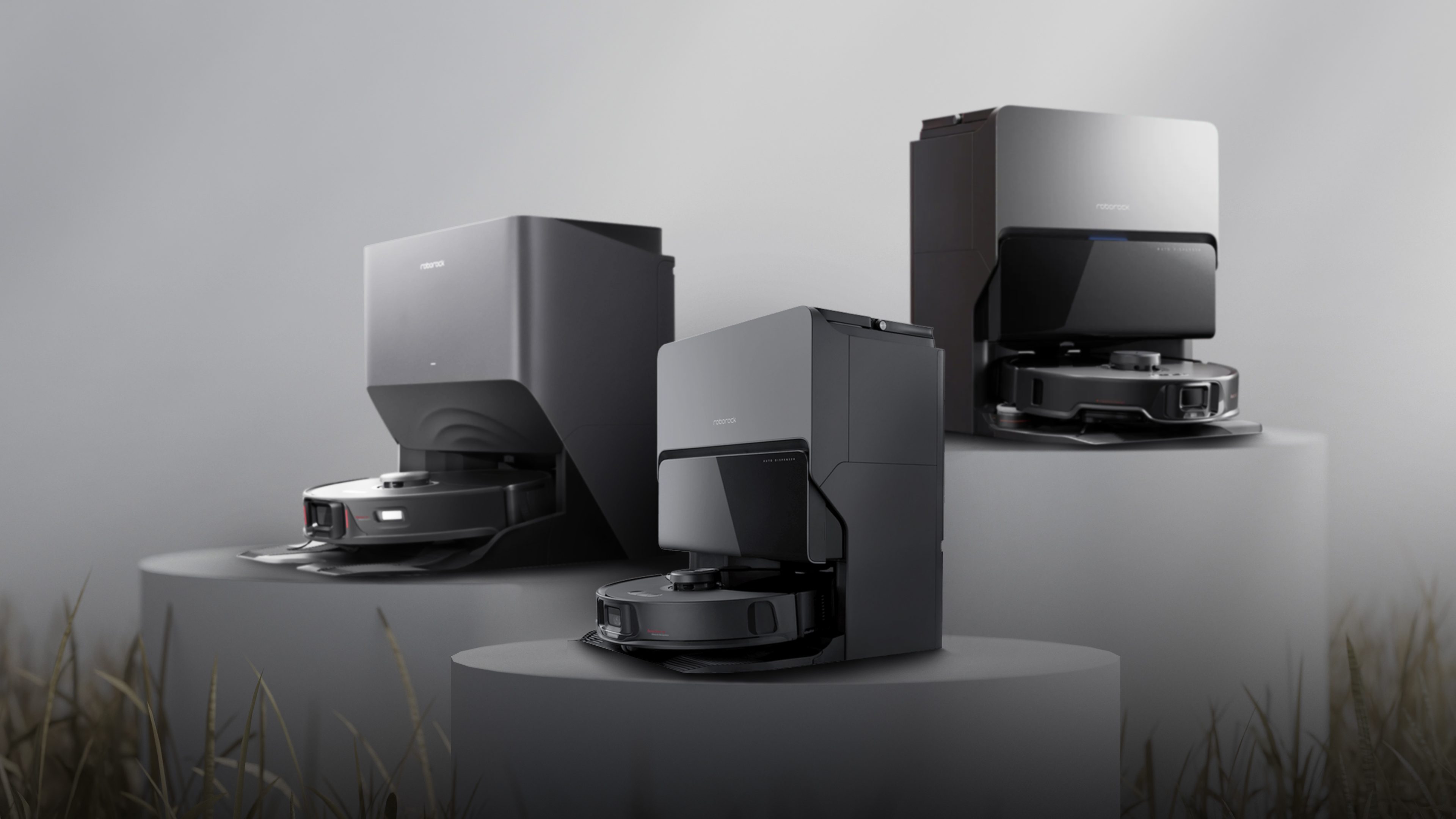

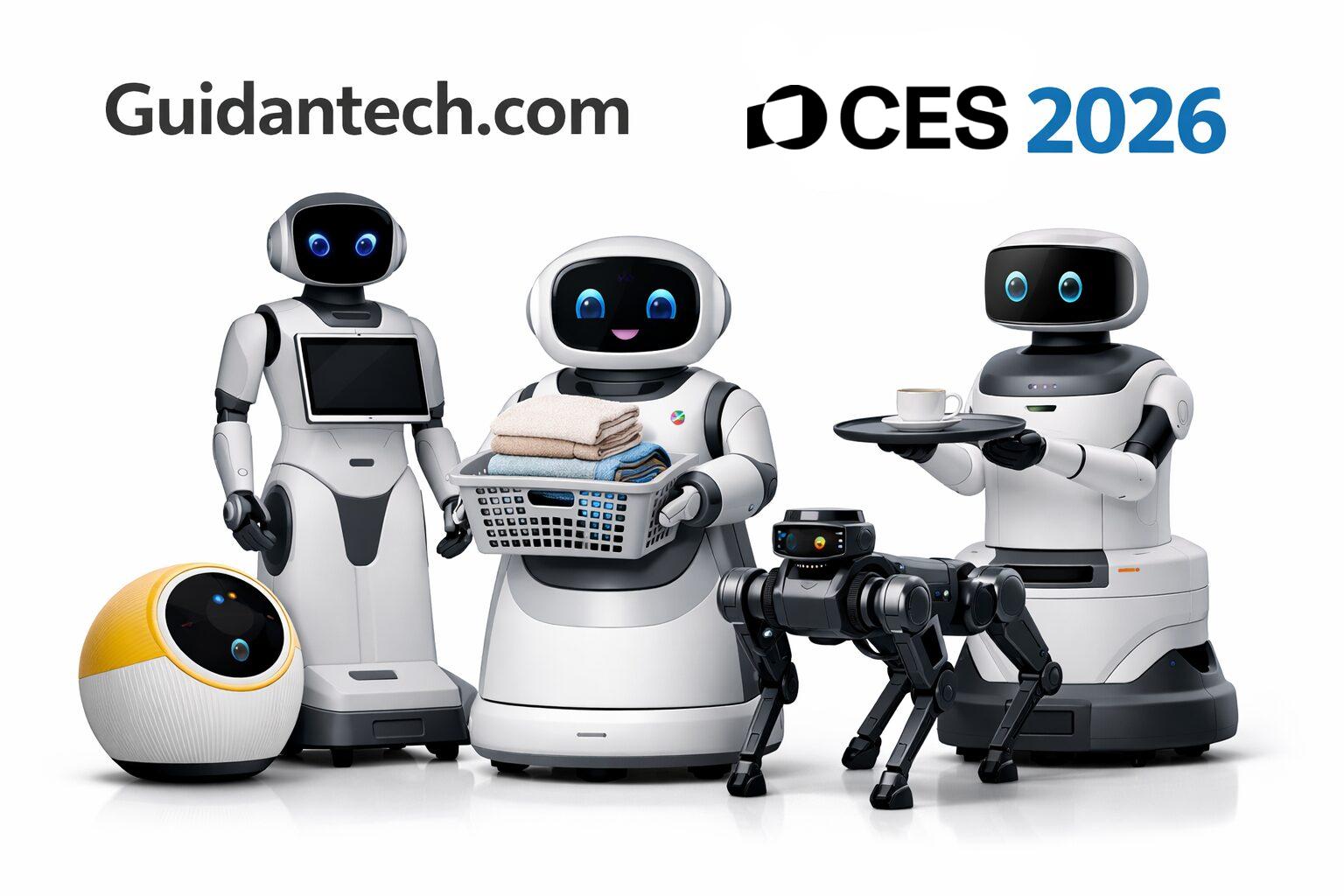
Robotics and smart home technology at CES 2026 are moving decisively beyond futuristic prototypes toward machines and systems that deliver real utility today. Exhibitors on the show floor are showcasing a growing range of task-oriented automation – from humanoid assistants capable of folding laundry to robot vacuums that climb stairs-signaling a shift toward practical robotics designed to support daily life rather than merely dazzle with novelty.
Across multiple booths, the industry’s efforts are grounded in artificial intelligence and physical autonomy, blending advanced sensors, AI vision, and collaborative IoT ecosystems that help machines understand and respond to real home environments. This emphasis on “physical AI” suggests an emerging era where robots and connected devices don’t just respond to commands but anticipate needs, navigate complex spaces, and interact with people and other smart appliances with increasing  fluency.
Early demonstrations from Samsung’s AI-enhanced appliance ecosystem that proactively offers insights into household tasks to robots designed for general chores and mobility – indicate that the smart home of the near future will combine ambient intelligence with practical action, extending beyond convenience toward genuinely reducing the time and effort spent on routine activities.
LG CLOiD and the Vision of a “Zero Labour Home”
One of the most discussed demonstrations so far comes from LG, which is showcasing LG CLOiD, an AI-powered home robot built to assist with routine household tasks.
CLOiD is designed to handle everyday activities such as:
-
Assisting with laundry workflows
-
Managing simple home chores
-
Coordinating with other smart home devices
Rather than positioning the robot as a replacement for human presence, LG is framing CLOiD as part of its broader “Zero Labour Home” concept – a vision where AI and automation reduce the time and effort required to maintain a household.
What makes this approach notable is its emphasis on incremental usefulness. CLOiD is not presented as a fully autonomous humanoid, but as a purpose-built assistant designed to operate within existing home ecosystems.
Practical Home Robots Take Center Stage
Beyond LG, CES 2026 is seeing increased attention on practical service robots from multiple manufacturers. These robots are being demonstrated performing tasks such as:
-
Carrying items around the home
-
Supporting basic household logistics
-
Assisting in hospitality-style environments adapted for residential use
This reflects a shift away from experimental robotics toward functional helpers that address real-world needs, particularly in homes with aging populations or busy households.
The broader implication is that home robotics is entering a phase of measured deployment, where reliability, safety, and affordability matter more than visual spectacle.
Smart Homes Get Smarter, Not Just More Connected
Robotics at CES 2026 is closely tied to parallel advances in smart home technology. Brands are increasingly positioning smart devices as coordinated systems, not isolated products.
For example, Govee is showcasing new smart lighting solutions designed to integrate more efficiently with home automation platforms. These systems emphasize:
-
Adaptive lighting based on environment and usage
-
Improved energy efficiency
-
Seamless interaction with other IoT devices
Alongside lighting, exhibitors are highlighting more efficient and responsive IoT hardware, reflecting a focus on sustainability, performance, and long-term reliability.
Why Robotics and Smart Homes Matter at CES 2026
Taken together, these developments point to a significant evolution in how smart homes are being defined. The focus is shifting from connectivity and remote control to intelligent coordination – where robots, sensors, and appliances work together with minimal oversight.
For consumers, this could mean homes that anticipate needs rather than react to commands.
For the industry, it signals new opportunities in:
-
Home automation services
-
Robotics-as-a-platform ecosystems
-
AI-driven household optimization
What to Watch as CES 2026 Continues
As more demonstrations and announcements unfold, the key question will be how quickly these systems can move from showcase to scale. The success of home robotics and advanced smart homes will depend on trust, affordability, and seamless integration into daily life.
So far, CES 2026 suggests that the industry is taking a more grounded approach – one focused less on spectacle and more on practical intelligence that reduces everyday friction.