Logitech G Pro X vs Razer Viper: Which Is the Best Esports Mouse for Competitive Gaming?

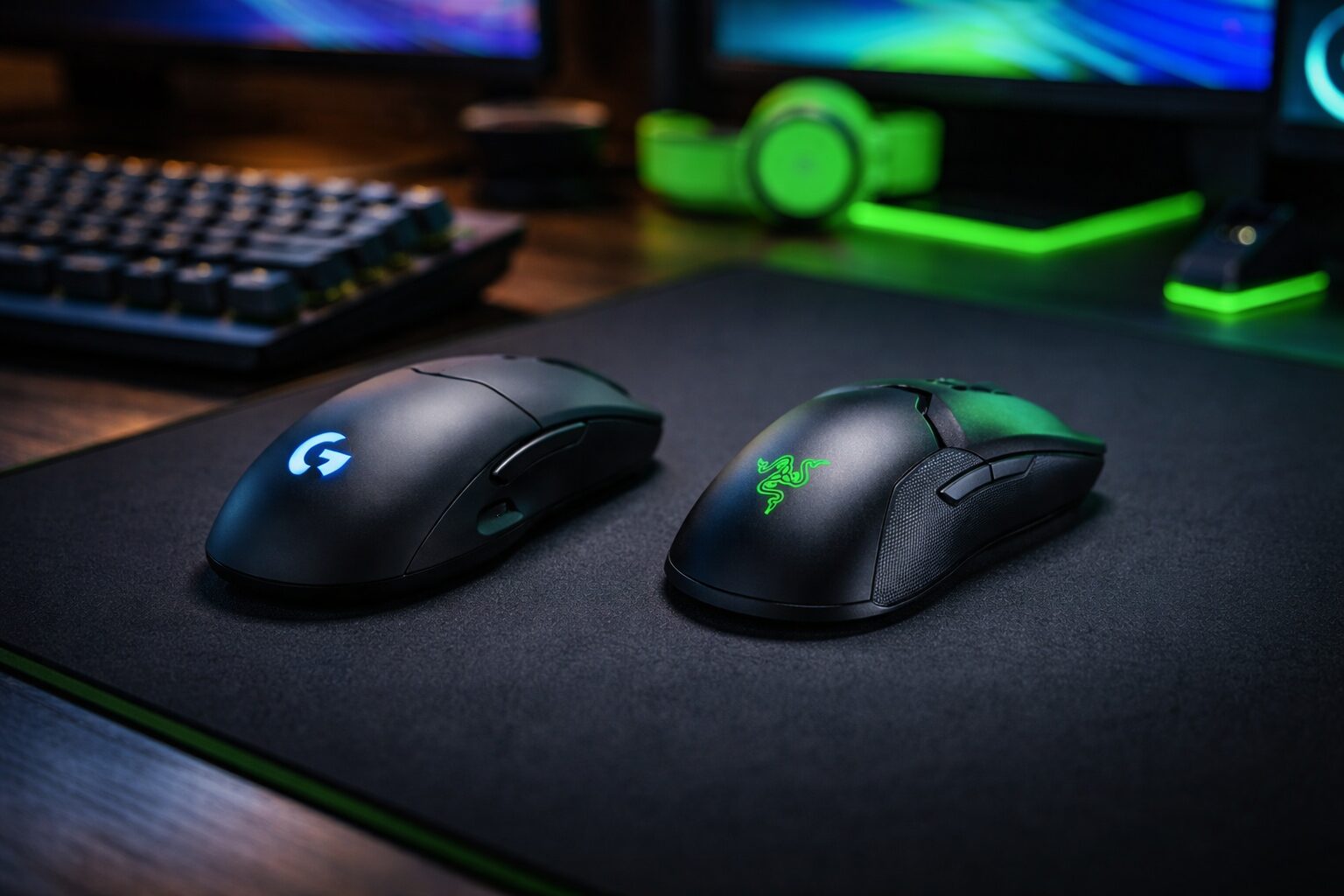
If you are serious about competitive gaming, you already know that the mouse in your hand can be the difference between winning a clutch duel and getting eliminated first. A mouse that feels sluggish, sits awkwardly in your palm, or adds even a few milliseconds of input lag can cost you rounds in Valorant or CS2. That is why experienced players obsess over sensor accuracy, polling rate, click latency, and weight distribution. Two mice that consistently come up in esports discussions are the Logitech G Pro X Superlight and the Razer Viper Ultimate. Both are engineered for high-level competitive play, but they cater to slightly different preferences. In this review, we break down exactly how these mice stack up so you can make the right call for your setup and playstyle.
Overview of the Logitech G Pro X Superlight
The Logitech G Pro X Superlight is one of the most talked-about mice in the esports community, and for good reason. Designed with input from professional players across multiple titles, Logitech stripped away every ounce of unnecessary weight to produce a mouse that weighs under 61 grams. It uses Logitech’s HERO 25K sensor, which is widely regarded as one of the most accurate optical sensors available at any price point. The wireless connection runs on LIGHTSPEED technology, delivering a response that Logitech claims is faster than most wired mice. For players who prioritize a featherweight feel and zero-compromise sensor performance, the G Pro X Superlight is hard to argue against.
Overview of the Razer Viper Ultimate
The Razer Viper Ultimate took the original Viper’s beloved ambidextrous design and gave it a wireless upgrade. Powered by Razer’s Focus+ optical sensor capable of 20,000 DPI, it features HyperSpeed wireless technology and an impressive battery life of up to 70 hours. The Viper Ultimate also comes with a charging dock, which is a nice bonus for players who want a clean desk setup. At around 74 grams, it sits a bit heavier than the G Pro X Superlight, but many players still find it extremely comfortable during long gaming sessions. The mouse supports both right-handed and left-handed use, making it a genuinely versatile option.
Design and Build Quality
The Logitech G Pro X Superlight has a right-handed ergonomic shape with a smooth, minimalist exterior. There are no RGB accents, no aggressive design lines, just a clean and functional shell built entirely around performance. The buttons feel crisp, the scroll wheel has satisfying tactile resistance, and the PTFE feet glide effortlessly across most mousepads.
The Razer Viper Ultimate features a symmetrical shape that works equally well for both right and left-handed players. It has a slightly more aggressive look with subtle Razer Chroma RGB lighting on the logo. Build quality on both mice is excellent, though the Viper Ultimate feels slightly more substantial in hand due to its additional weight. Neither mouse feels cheap or fragile.
Sensor Performance and Accuracy
The HERO 25K sensor in the Logitech G Pro X Superlight offers a DPI range of 100 to 25,600, zero smoothing, filtering, or acceleration at default settings, and a 1ms report rate with LIGHTSPEED. Tracking is exceptionally clean whether you are making micro-adjustments during a rifle duel in CS2 or sweeping across the screen in a fast-paced Fortnite build fight.
The Focus+ sensor in the Razer Viper Ultimate runs up to 20,000 DPI with 99.6% tracking accuracy according to Razer’s own testing. It includes an asymmetric cut-off feature that lets you customize the lift-off distance, which is a small but meaningful detail for players who use low sensitivity and frequently lift and reposition their mouse. Both sensors are legitimate top-tier performers, and in real gameplay the difference between them is minimal for most players.
Weight and Comfort for Long Gaming Sessions
Weight is one of the most subjective factors in choosing the best esports mouse, but the data is straightforward. The G Pro X Superlight comes in at approximately 61 grams, while the Razer Viper Ultimate weighs around 74 grams. That 13-gram gap is noticeable, especially during extended play sessions of three hours or more.
For players who run low DPI settings and rely on large, arm-aiming movements, lighter mice reduce fatigue significantly. The G Pro X Superlight has a slight edge here for FPS-focused players. However, the Viper Ultimate’s ergonomic shape fits a wider range of grip styles including palm, claw, and fingertip, which can also reduce fatigue regardless of weight.
Button Layout and Customization
Both mice feature six programmable buttons. The G Pro X Superlight keeps things simple with two side buttons on the left side only, designed for right-handed players. The main clicks are powered by Logitech’s mechanical button tensioning system, which provides a very consistent and tactile response with low pre-travel.
The Razer Viper Ultimate goes a step further with two side buttons on each side of the mouse, supporting ambidextrous users out of the box. Razer’s optical mouse switches fire at the speed of light, with zero debounce delay. In practice, this translates to extremely fast click registration, which matters in games like Valorant where a millisecond advantage can change a duel outcome.
Logitech G HUB and Razer Synapse 3 both offer solid software customization platforms. You can remap buttons, create DPI stages, set up lighting effects, and save profiles directly to onboard memory on either mouse.
Gaming Performance in Competitive Titles
Valorant: Both mice perform exceptionally well in Valorant. The G Pro X Superlight’s low weight makes it easier to flick to off-angles quickly, while the Viper Ultimate’s optical switches give it a slight edge in raw click speed for aggressive entry-fragging playstyles.
CS2: CS2 rewards precise tracking and consistent repositioning. The HERO 25K sensor handles sub-millimeter tracking at low DPI settings with ease. Many professional CS2 players have switched to the G Pro X Superlight specifically because of its featherweight feel and reliable wireless performance.
Call of Duty: In a fast-paced title like Call of Duty, reaction time and tracking during strafing are key. Both mice handle movement-heavy scenarios well. The Viper Ultimate’s ambidextrous design is a bonus for left-handed players who also want to compete at this level.
Fortnite: Building mechanics in Fortnite demand quick button activation and smooth camera movement. The Razer Viper Ultimate’s additional side buttons give players more flexibility for binding build keys or editing shortcuts to the mouse itself.
Comparison Table
| Feature | Logitech G Pro X Superlight | Razer Viper Ultimate |
| Weight | ~61g | ~74g |
| Sensor | HERO 25K | Focus+ 20K |
| Max DPI | 25,600 | 20,000 |
| Polling Rate | 1000Hz | 1000Hz |
| Wireless | LIGHTSPEED | HyperSpeed |
| Battery Life | ~70 hours | ~70 hours |
| Buttons | 5 programmable | 8 programmable |
| Charging | USB-C cable | Charging dock included |
| Price Range | $130-$160 | $100-$140 |
Don’t Miss This
Price and Value for Money
The Logitech G Pro X Superlight typically retails between $130 and $160 depending on the retailer and any active sales. The Razer Viper Ultimate usually sits between $100 and $140, and it comes with a charging dock included in the box, which adds genuine value. On a pure dollar-for-dollar basis, the Viper Ultimate edges ahead slightly, especially for buyers who appreciate having a dock for overnight charging.
See customer reviews for Logitech G Pro X Superlight on Amazon
Check latest price for Razer Viper Ultimate on Amazon
Pros and Cons of Logitech G Pro X Superlight
Pros:
- Extremely lightweight at 61 grams
- HERO 25K sensor is best-in-class for accuracy
- LIGHTSPEED wireless is near lag-free
- Clean, minimal design favored by esports professionals
- Long battery life up to 70 hours
Cons:
- Right-handed design only
- No charging dock in the box
- Higher price point than many competitors
- Limited button count for players who like macro options
Pros and Cons of Razer Viper Ultimate
Pros:
- Ambidextrous design works for left and right-handed players
- Optical switches with near-zero click latency
- Charging dock included
- Excellent sensor accuracy with asymmetric cut-off feature
- More programmable buttons for customization
Cons:
- Heavier than the G Pro X Superlight by about 13 grams
- RGB lighting is unnecessary weight and battery drain for pure competitors
- Razer Synapse software can be resource-heavy on some systems
Which Mouse Should You Choose Based on Your Gaming Style
Best for FPS players:
If you play Valorant or CS2 at a serious level and want the lightest possible mouse with a world-class sensor, the Logitech G Pro X Superlight is the clear recommendation. Its weight advantage translates directly into less fatigue and faster flicks over long grinding sessions.
Best for lightweight mouse lovers:
The G Pro X Superlight wins this category. Very few wireless mice at any price come in this light without sacrificing sensor quality.
Best for wireless gaming with charging convenience:
The Razer Viper Ultimate includes a charging dock, making it the more convenient daily driver for players who want to dock their mouse overnight rather than plug in a cable.
Best for left-handed players or ambidextrous grip:
The Razer Viper Ultimate is the only option between the two. Its symmetrical shape accommodates players of both orientations without compromise.
Best value option:
The Razer Viper Ultimate typically costs a bit less and includes the charging dock, making it the better value pick if budget is a consideration.
Which Esports Mouse Should You Buy
Both the Logitech G Pro X Superlight and the Razer Viper Ultimate are outstanding mice. Choosing between them comes down to what you personally prioritize in a gaming peripheral.
If weight is your primary concern and you play right-handed with an FPS-heavy game library, the Logitech G Pro X Superlight is one of the best esports mice ever made. Its sensor, wireless technology, and featherweight build give it an edge that professional players have clearly recognized.
If you want more button flexibility, a charging dock, ambidextrous comfort, and slightly better value for money, the Razer Viper Ultimate delivers a premium experience that competes right at the top of the market.
Either way, you are investing in a mouse that will not hold you back. The question is which one best fits your hand, playstyle, and gaming setup.