
You’re in a lecture hall. Battery at 9%. Forty Chrome tabs open. Assignment due in 30 minutes. Fan sounding like a jet engine preparing for takeoff.
Yeah… that laptop isn’t going to survive the semester.
Choosing the right laptop for college in 2026 isn’t about flashy specs or RGB lighting. It’s about reliability when you need it most, portability that doesn’t wreck your back, battery life that lasts through back-to-back classes, and long-term value that doesn’t force you to upgrade sophomore year.
Whether you’re studying engineering, business, medicine, or creative media, your laptop becomes your survival tool. It’s your note-taking device, research station, entertainment hub, and assignment-completion machine all rolled into one.
This guide is for:
- Freshers buying their first serious laptop
- Parents investing in something that will actually last 4+ years
- Students upgrading from a slow, outdated machine that crashes during Zoom calls
- Anyone who wants smart value – not marketing hype or unnecessary features
I’ve tested dozens of laptops over the past year, talked to students across different majors, and analyzed what actually matters when you’re juggling coursework, projects, and life. Let’s break down the best options worth your money this year.
Quick Recommendations
Best Overall
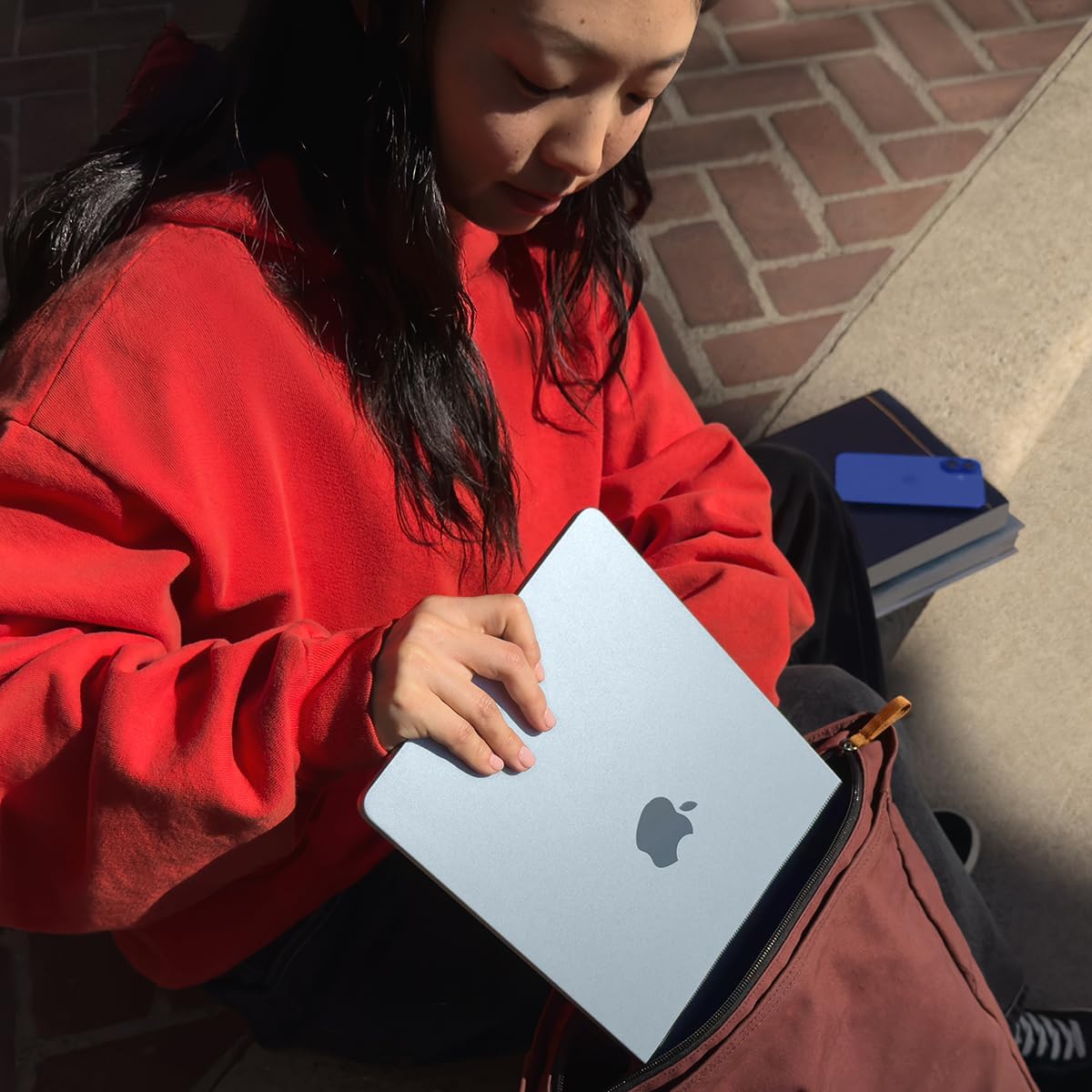
Apple MacBook Air 15-inch (2025, M3)
Incredible battery life, premium build quality, and performance that stays smooth for years. If you can afford it, this is the laptop that just works.
Best Budget Pick
ASUS Vivobook 15 (i5-1135G7)
Affordable, lightweight, and perfectly capable for everyday student tasks. Great entry point without sacrificing essentials.
Best Performance Pick
Apple MacBook Pro 13-inch (2025, M3 Pro)
For coding, video editing, design work, and heavy workloads – unmatched efficiency and power in a compact package.
Best Value for Money
Acer Aspire 5 15 (i7-1355U)
Strong specs without the premium price tag. The sweet spot for Windows users who want performance on a budget.
Comparison Table
| Model | Processor | RAM | Storage | Display | Weight | Best For |
|---|---|---|---|---|---|---|
| Apple MacBook Air 15 (2025) | Apple M3 | 16GB | 512GB SSD | 15.3″ Retina | 3.3 lbs | All-round excellence |
| Apple MacBook Pro 13 (2025) | M3 Pro | 16GB | 512GB SSD | 13.6″ Retina | 3.0 lbs | Creative/Dev students |
| Acer Aspire 5 15 | Intel i7-1355U | 16GB | 512GB SSD | 15.6″ FHD IPS | 3.8 lbs | Value performance |
| Acer Aspire 14 AI | Intel Core Ultra 5 | 16GB | 512GB SSD | 14″ WUXGA | 3.2 lbs | AI productivity |
| Lenovo IdeaPad 5 Touch | Intel i7-1355U | 16GB | 1TB SSD | 15.6″ FHD Touch | 4.0 lbs | Business students |
| HP 15.6 Touch | Intel i5 | 16GB | 512GB SSD | 15.6″ FHD Touch | 3.7 lbs | Everyday use |
| Dell Inspiron 15 | Intel i7 | 16GB | 1TB SSD | 15.6″ FHD | 3.6 lbs | Multitaskers |
| ASUS Vivobook 15 | Intel i5-1135G7 | 8GB | 512GB SSD | 15.6″ FHD | 3.5 lbs | Budget buyers |
Detailed Reviews
1. Apple MacBook Air 15-inch (2025, M3)
Overview
If you want a laptop that will last your entire degree without slowing down, freezing, or becoming obsolete, this is it. Apple finally made the large-screen Air feel powerful enough for serious work while maintaining that legendary battery life.
The M3 chip is ridiculously efficient. We’re talking about running Final Cut, 20+ Safari tabs, Spotify, and note-taking apps simultaneously without hearing a single fan noise. Because there is no fan.
Key Specs
- Apple M3 chip (8-core CPU, 10-core GPU)
- 16GB unified memory
- 512GB SSD storage
- 15.3-inch Liquid Retina display (2880 x 1864)
- 18+ hours battery life (real-world usage)
- MagSafe 3 charging
- Two Thunderbolt ports
- 1080p FaceTime camera
- Midnight, Starlight, Space Gray, Silver color options
Pros
Insane battery life – Seriously, you can forget your charger at home and still make it through a full day of classes
Silent operation – No fan means no distracting noise during lectures or study sessions
Premium aluminum build – Feels expensive because it is. This thing will survive years of backpack abuse
Long software support – Apple supports Macs for 7+ years with updates
Resale value – You’ll get decent money back when you eventually upgrade
Cons
Expensive upfront – No sugarcoating it, this is a significant investment
Limited ports – Only two Thunderbolt ports means you might need a hub
Not upgradeable – What you buy is what you’re stuck with (RAM and storage are soldered)
Gaming limitations – Not ideal for Windows-exclusive games
Who Should Buy This?
Students in business, law, medicine, social sciences, or general studies who want zero stress and long-term reliability. If you value build quality, battery life, and a seamless ecosystem over raw specs, this is your laptop.
Also perfect for students who already have an iPhone or iPad – the integration is genuinely useful (AirDrop, Universal Clipboard, Handoff).
Why It’s Worth the Money
It’s not cheap, and I won’t pretend it is. But here’s the thing: you won’t need to upgrade in 2 years. You won’t deal with slowdowns. You won’t waste time troubleshooting driver issues or battery degradation.
When you calculate the total cost of ownership over 4-5 years, including resale value, the gap between this and cheaper Windows laptops narrows significantly.
2. Apple MacBook Pro 13-inch (2025, M3 Pro)
Overview
For serious creators and coders, this is the MacBook you want. The difference between this and the Air? Active cooling and the M3 Pro chip. That means sustained performance under heavy workloads.
This thing handles Xcode compilation, Adobe Creative Suite, 4K video editing, and multiple virtual machines without breaking a sweat. The cooling system keeps it quiet even during intensive tasks.
Key Specs
- M3 Pro chip (12-core CPU, 18-core GPU)
- 16GB unified memory
- 512GB SSD storage
- 13.6-inch Liquid Retina XDR display
- Active cooling system
- 20-hour battery life
- Three Thunderbolt 4 ports
- HDMI port
- SDXC card slot
- MagSafe 3 charging
Pros
Extreme efficiency – Pro-level performance with laptop-class battery life
Professional display – XDR brightness for color-accurate work
Active cooling – Sustains performance for hours without thermal throttling
Strong resale value – Pro models hold value even better than Airs
More ports – HDMI and SD card slot are genuinely useful for media students
Cons
Overkill for basic users – If you’re just writing papers and browsing, save your money
Premium pricing – Significantly more expensive than the Air
Heavier – Still portable, but you’ll notice the extra weight
Smaller screen – The 13.6″ might feel cramped if you’re used to larger displays
Who Should Buy This?
Engineering students running simulations, computer science majors compiling code, media production students editing video, architecture students using CAD software, or anyone whose coursework demands serious horsepower.
If your major involves professional software that needs GPU acceleration or sustained CPU performance, this is worth the investment.
Why It’s Worth the Money
If your degree demands performance, don’t compromise. The time you save on rendering, compiling, or processing pays dividends over four years. Plus, this laptop will likely outlast your degree and serve you well into your career.
Think of it as a tool investment, not just a purchase.
3. Acer Aspire 5 15 (i7-1355U)
Overview
One of the smartest Windows buys in 2026. Acer managed to pack an Intel Core i7 processor and 16GB RAM into a machine that doesn’t cost a fortune.
The build quality isn’t premium – you’ll know it’s plastic when you pick it up. But the performance? Absolutely solid for the price. This is proof you don’t need to spend MacBook money to get capable hardware.
Key Specs
- Intel Core i7-1355U (10-core, up to 5.0GHz)
- 16GB DDR4 RAM
- 512GB PCIe NVMe SSD
- 15.6-inch FHD IPS display (1920 x 1080)
- Intel Iris Xe Graphics
- Backlit keyboard
- Wi-Fi 6
- Windows 11 Home
- Multiple USB ports including USB-C
- HDMI output
Pros
Strong multitasking – 16GB RAM handles multiple apps without stuttering
Affordable for the specs – Rarely do you see i7 + 16GB at this price point
Comfortable keyboard – Decent key travel, good for long typing sessions
Upgradeable – You can swap RAM and storage if needed
Port selection – USB-A, USB-C, HDMI, and SD card reader included
Cons
Average speakers – Fine for YouTube, not great for music or movies
Plastic build – Feels budget compared to aluminum laptops
Battery life – Expect 6-8 hours, not the all-day endurance of MacBooks
Display brightness – Struggles a bit in direct sunlight
Who Should Buy This?
Students who want performance without Apple pricing. Perfect for business majors, economics students, pre-med students, or anyone who needs a capable Windows machine for coursework, research, and productivity software.
Also great if you need specific Windows-only software that doesn’t run well on Mac.
Why It’s Worth the Money
You get i7 performance at mid-tier cost. That’s the entire value proposition. While others are paying $1,000+ for similar specs, you’re getting the job done for significantly less.
The money you save can go toward textbooks, better peripherals, or literally anything else. Smart budgeting matters.
4. Acer Aspire 14 AI Copilot+
Overview
Built for the AI-heavy future of productivity. Acer is betting that students will increasingly rely on AI tools for research, writing assistance, and productivity automation.
The Intel Core Ultra 5 processor has dedicated AI acceleration hardware, making it faster at AI-related tasks than standard processors. If you’re using ChatGPT, Claude, or other AI tools regularly, you’ll notice the difference.
Key Specs
- Intel Core Ultra 5 processor
- 16GB LPDDR5X RAM
- 512GB PCIe Gen 4 SSD
- 14-inch WUXGA display (1920 x 1200)
- Integrated Arc Graphics
- AI-optimized NPU
- Windows 11 with Copilot integration
- Wi-Fi 6E
- Compact, portable design
- Fingerprint reader
Pros
Future-ready chip – AI acceleration will become more important over time
Great battery life – Core Ultra chips are efficient, expect 10-12 hours
Portable – 14-inch size is easier to carry than 15.6-inch machines
Fast memory – LPDDR5X is noticeably quicker than older DDR4
Modern connectivity – Wi-Fi 6E for faster campus network speeds
Cons
Smaller screen – 14 inches might feel cramped for multitasking
Premium mid-range price – Costs more than standard i5 laptops
AI features still developing – Not all software takes advantage yet
Limited availability – Newer model, might be harder to find deals
Who Should Buy This?
Students leaning into AI tools and automation workflows. If you’re studying data science, using AI for research assistance, or simply want a laptop that’s optimized for the next few years of technology trends, this makes sense.
Also great for students who value portability and don’t need the largest screen.
Why It’s Worth the Money
You’re buying into the platform that software is being optimized for. As AI integration becomes standard in productivity apps, you’ll be ahead of the curve instead of struggling with older hardware.
Think of it as investing in tomorrow’s workflow today.
5. Lenovo IdeaPad 5 15 Touch (i7-1355U)
Overview
Lenovo’s IdeaPad line has always been about reliable productivity at reasonable prices. This model delivers exactly that, with a touchscreen bonus that’s genuinely useful for note-taking and presentations.
The build quality sits comfortably in the “good enough” category – it’s not premium, but it feels solid. The keyboard is excellent (Lenovo knows keyboards), and the trackpad is responsive.
Key Specs
- Intel Core i7-1355U processor
- 16GB DDR4 RAM
- 1TB PCIe SSD storage
- 15.6-inch FHD IPS touchscreen (1920 x 1080)
- Intel Iris Xe Graphics
- Backlit keyboard
- Fingerprint reader
- Dolby Audio speakers
- Wi-Fi 6
- Windows 11 Home
- Multiple USB ports
Pros
Touchscreen functionality – Actually useful for scrolling, annotating PDFs, and presentations
Massive storage – 1TB means you won’t worry about space for years
Good keyboard – Lenovo’s ThinkPad heritage shows in typing comfort
Fingerprint login – Quick and secure Windows Hello authentication
Decent speakers – Better than average for laptop speakers
Cons
Slightly heavy – At 4 lbs, you’ll feel it in your backpack
Average battery – Expect 7-9 hours, not all-day endurance
Plastic chassis – Feels durable but not premium
Bloatware – Comes with some pre-installed Lenovo software you’ll want to remove
Who Should Buy This?
Business students who need touchscreen functionality for presentations, accounting majors juggling multiple Excel files, or anyone who values storage space and doesn’t mind a slightly heavier laptop.
Perfect for students who take handwritten notes digitally or annotate documents regularly.
Why It’s Worth the Money
The 1TB storage alone is worth noting – most laptops at this price offer 512GB. That extra space means you can keep your entire college career’s worth of files, projects, and media on one machine without external drives.
The touchscreen adds versatility that you’ll appreciate more than you expect.
6. HP 15.6-inch Touchscreen Laptop (2026)
Overview
HP’s latest refresh focuses on everyday reliability. This isn’t the flashiest laptop, but it nails the fundamentals: decent performance, touchscreen convenience, and HP’s typically solid build quality.
It’s the laptop equivalent of a reliable Honda Civic. Not exciting, but it gets you where you need to go without drama.
Key Specs
- Intel Core i5 processor (12th gen or newer)
- 16GB DDR4 RAM
- 512GB PCIe SSD
- 15.6-inch FHD IPS touchscreen
- Intel UHD Graphics
- HP Fast Charge technology
- Windows 11 Home
- Wi-Fi 6
- HD webcam
- Bang & Olufsen audio
Pros
Reliable performance – i5 + 16GB handles coursework smoothly
Fast charging – HP’s Fast Charge gets you to 50% in about 45 minutes
Touchscreen included – Adds flexibility for note-taking and navigation
Good warranty support – HP’s customer service is generally responsive
Clean design – Professional appearance, suitable for any environment
Cons
Generic styling – Nothing distinctive about the design
Average battery life – 6-8 hours typical usage
Not upgradeable – RAM is soldered in this model
Display could be brighter – Indoor use is fine, outdoor struggles
Who Should Buy This?
Students who want something dependable without overthinking the decision. Perfect for general studies, liberal arts, pre-law, or any major that doesn’t require specialized software.
Great for students who value brand reliability and straightforward functionality over cutting-edge features.
Why It’s Worth the Money
Sometimes the best choice is the one that just works. HP’s quality control is decent, their support is accessible, and this laptop will handle four years of college without major issues.
No surprises, no disappointments – just solid performance.
7. Dell Inspiron 15 3000 Series (2026)
Overview
Dell’s Inspiron line is legendary for a reason – they’ve been making reliable student laptops for decades. This updated model continues that tradition with modern specs and Dell’s typically excellent build quality.
The 1TB storage is a standout feature at this price point, and the overall package screams “dependable workhorse.”
Key Specs
- Intel Core i7 processor (latest generation)
- 16GB DDR4 RAM
- 1TB PCIe SSD storage
- 15.6-inch FHD display (1920 x 1080)
- Intel Iris Xe Graphics
- Backlit keyboard
- Numeric keypad
- Dell ComfortView software
- Windows 11 Home
- Multiple USB ports including USB-C
- HDMI output
Pros
Massive storage – 1TB means space is never a concern
Solid multitasking – 16GB RAM + i7 handles heavy workloads
Numeric keypad – Genuinely useful for accounting, statistics, or data entry
Dell support – Good warranty options and customer service
Upgradeable design – Can swap storage and RAM if needed
Cons
Bulkier design – Not the most portable option at 3.6 lbs
Average battery – Expect 7-8 hours realistically
Generic appearance – Looks like every other Dell laptop
Webcam quality – Adequate but not impressive for video calls
Who Should Buy This?
Students who need serious storage, prefer Windows, and value Dell’s reputation for reliability. Perfect for business majors, engineering students managing large files, or anyone who downloads a lot of course materials.
The numeric keypad makes this especially attractive for accounting, finance, or statistics majors.
Why It’s Worth the Money
Dell laptops hold up. Students who bought Inspirons in 2020 are often still using them without issues. That longevity, combined with 1TB storage and strong specs, makes this a smart investment.
You’re paying for proven reliability and space you won’t outgrow.
8. ASUS Vivobook 15 (i5-1135G7)
Overview
The smart budget option. If you need a laptop that works and don’t have MacBook money, this is where you start looking.
ASUS packed the essentials into an affordable package: SSD storage, FHD display, and a processor that handles everyday tasks without complaints. The build quality feels budget, but the performance doesn’t.
Key Specs
- Intel Core i5-1135G7 processor
- 8GB DDR4 RAM
- 512GB PCIe SSD
- 15.6-inch FHD display (1920 x 1080)
- Intel Iris Xe Graphics
- Lightweight design (3.5 lbs)
- Backlit keyboard
- Windows 11 Home
- Wi-Fi 6
- NumberPad touchpad feature
- USB-C and USB-A ports
Pros
Affordable – One of the best value propositions for students on tight budgets
Lightweight – Easier to carry than most 15.6-inch laptops
512GB SSD included – No compromises on storage speed
NumberPad feature – Touchpad doubles as a numeric keypad
Decent battery life – 7-9 hours is respectable at this price
Cons
Only 8GB RAM – Might need an upgrade for heavy multitasking
Older processor generation – 1135G7 is reliable but not cutting-edge
Plastic build – Feels budget when you pick it up
Display brightness – Not ideal for outdoor use
Who Should Buy This?
Students on tight budgets who need something functional now and can upgrade later if needed. Perfect for freshmen who aren’t sure what they’ll need, community college students, or anyone who needs a backup laptop.
Also great if you’re buying a secondary machine for note-taking and basic tasks.
Why It’s Worth the Money
Sometimes you need a laptop that costs less than your textbooks. This delivers usable performance without breaking the bank. The 8GB RAM might become limiting eventually, but for most coursework, it’s adequate.
You’re getting SSD speed and modern connectivity at a price that won’t stress your student loans.
Important Note: If you can afford to upgrade to 16GB RAM, do it. Many retailers offer upgrade options at checkout, and it’s worth the extra investment for longevity.
Complete Buying Guide for College Laptops
Processor Guide: What You Actually Need
Let’s cut through the marketing jargon and talk real-world performance.
Intel Core i5 / AMD Ryzen 5
This is enough for most students. Seriously. If you’re writing papers, browsing research articles, streaming videos, and using standard productivity software, an i5 or Ryzen 5 will handle it smoothly.
Modern i5 chips are genuinely fast. The “i5 is slow” reputation comes from older generations – today’s i5 is faster than yesterday’s i7.
When it’s enough: Business, liberal arts, social sciences, pre-med, general studies
Intel Core i7 / AMD Ryzen 7
Better for heavy multitasking and demanding applications. You’ll notice the difference when running multiple virtual machines, compiling code, or editing photos/videos.
When you need it: Engineering, computer science, architecture, media production, data science
Apple M-series (M2, M3, M3 Pro)
Completely different architecture. Unmatched efficiency means incredible battery life and performance that doesn’t slow down over time. The M3 chip in the base MacBook Air outperforms many i7 Windows laptops while sipping power.
When it makes sense: Anyone in the Apple ecosystem, students who value battery life and longevity, creative professionals
Reality check: Don’t overpay for an i9 or M3 Pro unless your coursework genuinely demands it. Most students overestimate their performance needs.
RAM: How Much Do You Really Need?
8GB RAM
The absolute bare minimum in 2026. It’ll work for basic tasks, but you’ll feel the limitations when:
- Running multiple browser tabs
- Using Zoom while taking notes
- Opening large documents
- Multitasking between apps
Verdict: Only acceptable if budget is extremely tight. Plan to upgrade if possible.
16GB RAM
The sweet spot. This is what you should aim for. It handles:
- 20+ browser tabs without slowdowns
- Zoom calls while running other apps
- Photo editing in Lightroom
- Multiple Office documents simultaneously
- Light video editing
Verdict: Recommended for 95% of students. Provides comfortable headroom for growth.
32GB RAM
Overkill for most students. Only necessary if you’re:
- Running multiple virtual machines
- Doing professional video editing (4K+)
- 3D rendering or CAD work
- Compiling large codebases
- Running simulations
Verdict: Know your needs before spending extra. Most students won’t use this capacity.
Storage: SSD vs HDD Explained
SSD (Solid State Drive) – ALWAYS CHOOSE THIS
Faster boot times (10-15 seconds vs 2+ minutes)
Apps launch instantly instead of loading slowly
Better battery life (no moving parts)
More reliable (shock resistant)
Quieter operation (silent)
HDD (Hard Disk Drive) – AVOID IN 2026
Cheaper per gigabyte (only advantage)
Slower performance that makes everything feel sluggish
More prone to failure from drops or movement
Drains battery faster
Makes noise
How much storage?
- 256GB: Too small for most students unless you rely heavily on cloud storage
- 512GB: Sweet spot for most majors
- 1TB: Great if you work with large files, media, or want to avoid external drives
Pro tip: You can always add external storage later. You can’t make an HDD faster. Always choose SSD.
Display Considerations
Resolution
- 1920 x 1080 (FHD): Minimum acceptable. Crisp enough for coursework and media.
- Higher resolutions: Nice to have but not essential unless you’re doing design work
Panel Type
- IPS: Wide viewing angles, better color accuracy. This is what you want.
- TN: Cheaper but poor viewing angles. Avoid if possible.
Size
- 13-14 inches: Ultra-portable, great for note-taking in class
- 15.6 inches: Best balance of screen space and portability
- 17 inches: Desktop replacement, not ideal for carrying around campus
Brightness
Aim for 300 nits minimum if you study outdoors or in bright spaces. Most budget laptops max out around 250 nits, which struggles in direct sunlight.
Touchscreen?
Nice to have but not essential. Adds cost and drains battery slightly faster. Useful for:
- Digital note-taking and annotation
- Presentations
- Creative work
Skip it if budget is tight – you won’t miss it for typing and browsing.
Battery Life: Real Expectations
Manufacturer claims are always optimistic. Here’s what to actually expect:
Budget Windows Laptops (i5/i7 Intel): 6-8 hours real-world usage
Efficient Windows Laptops (Core Ultra, AMD): 8-10 hours
MacBook Air (M-series): 12-18 hours (genuinely all-day)
MacBook Pro (M-series): 15-20 hours
Reality factors that kill battery:
- Screen brightness cranked to max
- Running demanding apps
- Poor Wi-Fi signal (laptop works harder)
- Background apps you forgot about
- Aging battery (degrades over time)
What “real-world usage” means: Mix of note-taking, browsing, streaming, and productivity apps at 50-70% brightness. Not gaming or video rendering.
Pro tip: If battery life matters, Apple’s M-series chips are genuinely unmatched. Windows laptops are improving but can’t compete yet.
Build Quality & Portability
Weight Considerations
- Under 3 lbs: Ultra-portable, barely notice in backpack
- 3-4 lbs: Comfortable for daily carry
- Over 4 lbs: You’ll feel it after a full day on campus
Remember: You’re carrying this between classes, potentially multiple times daily. An extra pound matters over four years.
Build Materials
Aluminum: Premium feel, better heat dissipation, more durable. Found on MacBooks and higher-end Windows laptops.
Plastic: Cheaper, feels budget, but can still be durable. Most sub-$700 laptops use plastic.
Magnesium alloy: Lightweight and strong. Found on some premium Windows laptops.
Durability Factors
- Hinge quality: Weak hinges fail after a year of opening/closing
- Keyboard flex: Cheap laptops have keyboards that bend when typing
- Port placement: Ports on the sides are better than back (easier access)
- Rubber feet: Keep laptop stable and allow airflow
Testing tip: Press on the keyboard deck. If it flexes noticeably, build quality is questionable.
Common Mistakes College Students Make When Buying Laptops
1. Buying Based on Brand Loyalty Alone
Your dad’s Dell from 2005 was great. That doesn’t mean today’s Dell is automatically your best option.
Brands change. Quality fluctuates. Models vary wildly within the same brand. Research the specific model, not just the logo on the lid.
HP makes both excellent laptops and complete garbage. Same with Acer, ASUS, and every other manufacturer. Judge each model individually.
2. Choosing 8GB RAM in 2026 (When 16GB is Available)
This is penny-wise and pound-foolish. The $50-100 difference between 8GB and 16GB will haunt you by sophomore year when your laptop struggles with basic multitasking.
Chrome alone can eat 4GB with a few tabs open. Add Zoom, Office apps, and some background processes, and you’re maxed out.
Exception: If you’re truly broke and can upgrade later, fine. But check if the RAM is soldered (not upgradeable) first.
3. Ignoring Battery Life Until It’s Too Late
That gaming laptop with 3-hour battery life seems cool until you’re sitting in the library with 15% charge and your MacBook-wielding classmate is at 67% after six hours.
Battery anxiety is real. Constantly hunting for outlets is annoying. Finishing assignments because your laptop died is worse.
If you’re not always near an outlet, battery life should be a top-three consideration.
4. Overpaying for Specs You Won’t Use
Do you really need an RTX 4060 GPU for your political science degree? Will that i9 processor help you write better essays?
Probably not.
High-end specs are for high-end workloads. If you’re not rendering 3D animations, editing 4K video, or running complex simulations, you’re paying for performance you’ll never use.
Spend that money on more storage, better build quality, or just save it for textbooks.
5. Buying an HDD-Based Laptop in 2026
If someone tries to sell you a laptop with a hard disk drive in 2026, run.
SSDs are standard now. HDDs are slow, fragile, battery-draining relics. The $50 you save isn’t worth the daily frustration of waiting for everything to load.
No exceptions. Even on the tightest budget, find an SSD.
6. Not Considering Total Cost of Ownership
That $400 laptop seems like a steal until:
- Battery dies after 18 months ($80 replacement)
- Charger breaks ($60 new one)
- Performance degrades, forcing an upgrade ($400 new laptop)
Meanwhile, someone who spent $1,000 on a quality laptop is still using it four years later with zero issues.
Sometimes spending more upfront saves money long-term. Consider durability, battery longevity, build quality, and resale value – not just the initial price tag.
Frequently Asked Questions
What’s the best laptop for college students in 2026?
For most students, the MacBook Air 15-inch (M3) offers the best overall package: exceptional battery life, reliable performance, premium build quality, and long-term software support.
If budget is tight, the ASUS Vivobook 15 delivers solid value. For Windows users wanting performance, the Acer Aspire 5 with i7 processor offers great specs at a reasonable price.
There’s no universal “best” – it depends on your major, budget, and preferences.
Is 8GB RAM enough for college in 2026?
Technically yes, realistically no.
8GB will handle basic tasks: word processing, web browsing, email, and streaming. But modern usage involves multitasking – multiple browser tabs, Zoom calls, note-taking apps, and productivity software running simultaneously.
You’ll feel the limitations within a year. 16GB is the safer investment unless budget absolutely prohibits it.
Should I get a Windows laptop or a MacBook for college?
Choose MacBook if:
- Battery life is a priority
- You want something that lasts 4+ years without slowdowns
- You already have iPhone/iPad (ecosystem benefits)
- You value build quality and customer support
- Your major doesn’t require Windows-specific software
Choose Windows if:
- Budget is tight (more variety at lower prices)
- You need specific Windows-only software
- You prefer flexibility and customization
- You’re studying engineering or computer science (more software compatibility)
- You want gaming as an option
Both platforms are excellent. The “Mac vs PC” debate is mostly personal preference at this point.
How much storage do I need for college?
Minimum: 512GB SSD
This covers:
- Operating system and apps (100-150GB)
- Course materials and documents (50-100GB)
- Photos and media (100-200GB)
- Downloads and misc files (50-100GB)
That leaves breathing room without constant storage management.
Ideal: 1TB SSD if you:
- Work with large media files
- Download lots of course materials
- Want to avoid external drives
- Don’t want to manage cloud storage constantly
Skip: 256GB unless you’re religious about cloud storage and regularly clean up files.
What processor is best for college students?
For most majors: Intel Core i5 or AMD Ryzen 5 (or Apple M3 base)
This handles:
- Microsoft Office and Google Workspace
- Web browsing and research
- Video streaming and media
- Zoom calls and online classes
- Light photo editing
For demanding majors: Intel Core i7, AMD Ryzen 7, or Apple M3 Pro
Needed for:
- Engineering simulations
- Video editing and rendering
- Programming and compilation
- CAD software
- Data analysis and modeling
Don’t overspend on an i9 or high-end chip unless your specific coursework demands it.
Is a touchscreen laptop worth it for college?
Worth it if:
- You take digital handwritten notes
- You annotate PDFs and documents frequently
- You do presentations regularly
- You find touchscreen navigation intuitive
Skip it if:
- You’re on a tight budget
- You primarily type notes
- You want maximum battery life
- You don’t use stylus input
Touchscreens add $100-200 to the price and drain battery slightly faster. They’re nice to have but not essential for most students.
Final Verdict: Best Laptop by Budget Level
If Budget Isn’t Tight ($1,200+)
Apple MacBook Air 15-inch (M3) – https://www.amazon.com/dp/B0DZD9VLQ4?tag=techristic-20
This is the laptop that just works. Exceptional battery life, premium build, and performance that stays consistent for years. If you can afford it, you won’t regret it.
If You Need Maximum Performance ($1,500+)
Apple MacBook Pro 13-inch (M3 Pro)
For engineering, CS, or creative majors who need professional-grade performance in a laptop package.
If You Want Best Value Windows Laptop ($600-800)
Strong specs without premium pricing. Perfect for Windows users who want capable hardware without breaking the bank.
If Budget is Tight ($400-500)
Gets the job done without the stress of student loans. Consider upgrading RAM when budget allows.
If You Want Future-Proof AI Features ($700-900)
Built for the AI-driven workflow that’s becoming standard in productivity software.
Conclusion
College is stressful enough. Your laptop shouldn’t add to that stress.
The right laptop disappears into your workflow. It starts quickly, lasts through marathon study sessions, survives being thrown in backpacks, and handles whatever your coursework demands.
The wrong laptop becomes a constant source of frustration. Slow performance, dead batteries, crashes during finals week – these aren’t minor inconveniences when your grades depend on getting work done.
Choose smart. Think long-term. Buy once.
Don’t chase the cheapest option if it means replacing it sophomore year. Don’t overspend on specs you’ll never use. Find the balance between your budget, your needs, and your major’s requirements.
And remember: the best laptop is the one that lets you focus on learning instead of troubleshooting technical problems.
Good luck with your studies. You’ve got this.