
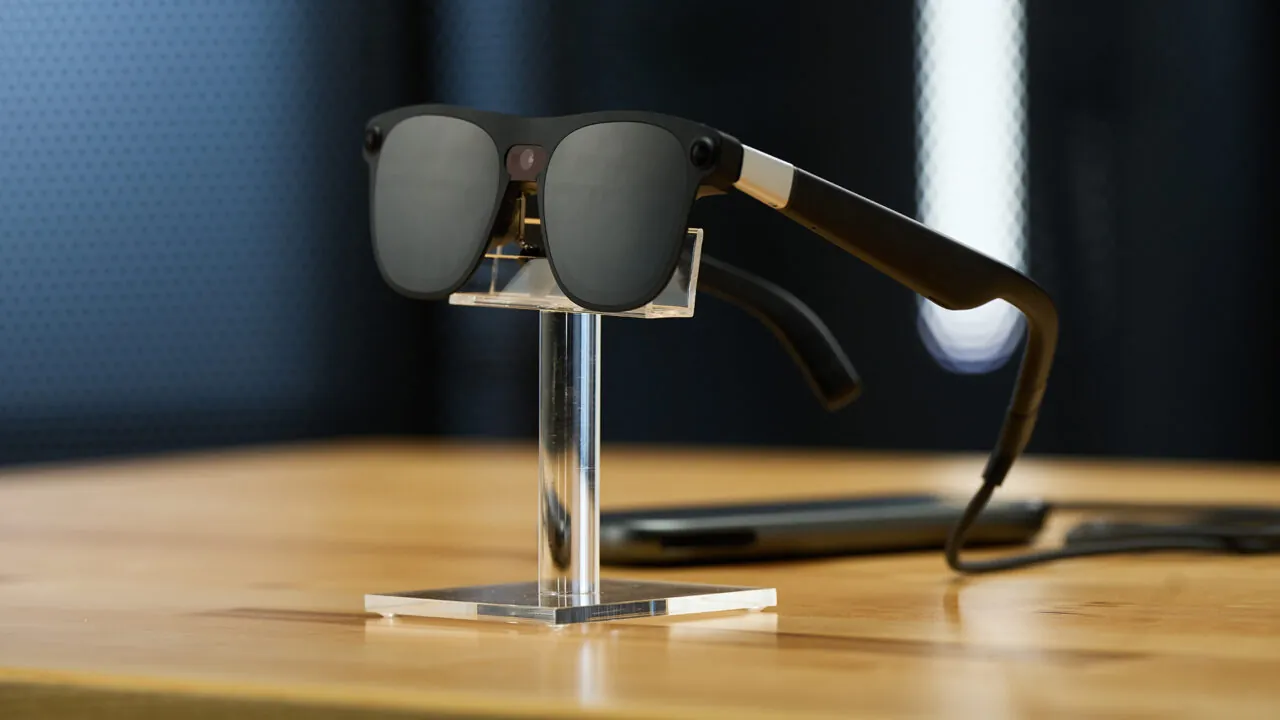
Google has entered the smart glasses race with three Android XR prototypes that directly challenge Meta’s recent product launch. The prototypes include Project Aura (a lightweight XR headset alternative), monocular display glasses (comparable to Meta’s Ray-Ban Display Glasses), and futuristic binocular glasses. These devices solve critical limitations in Meta’s offering by leveraging Google’s ecosystem advantages: seamless Android integration, superior AI through Gemini, and broader app compatibility from day one. The monocular glasses stand out as the most compelling option, functioning as an extension of your smartphone rather than a standalone device, which keeps the design lightweight and the experience familiar. Expected to launch in 2026, these glasses represent a genuine shift in how we might interact with technology daily, though Google faces its own trust deficit with consumers around privacy and data collection.
Bottom line: Google isn’t just catching up to Meta-they’re potentially leapfrogging them by making smart glasses that actually fit into how people already use their phones.
Key Insights
The Hardware Play: Google demonstrated three distinct prototype categories, each targeting different use cases and price points. Project Aura mimics the Galaxy XR but in glasses form, monocular glasses compete directly with Meta’s offering, and binocular glasses preview a more advanced future (2027 or later).
The Software Advantage: Unlike Meta’s closed ecosystem limited to WhatsApp, Instagram, and Facebook, Android XR glasses tap into the entire Android developer community. Any app with ongoing notifications can work with the glasses through simple API hooks-no app store approval or custom development required.
The AI Differentiator: Gemini powers the entire experience, providing real-time translation, visual recognition, recipe suggestions, and natural conversational interactions. This positions Google’s AI capabilities as a core selling point against Meta’s less mature AI offerings.
The Simplicity Principle: Google’s design philosophy centers on minimalism-showing only essential information when needed. Navigation shows just your next turn, music displays basic playback controls, and notifications appear as streamlined versions of what’s already on your phone.
The Privacy Challenge: Despite hardware privacy features like prominent LED indicators and physical on/off switches with red signaling, Google must overcome significant consumer skepticism about wearing a Google-controlled camera on their face all day.
Breakdown & Analysis
Three Prototypes, Three Strategies
Project Aura: The Portable Powerhouse
Project Aura represents Google and XREAL’s answer to the question “what if the Galaxy XR was actually portable?” It’s essentially the same tech-same Android XR operating system, same Snapdragon XR2 Plus Gen 2 chipset, same gesture controls-but packaged in glasses rather than a full VR headset. You still need to carry a “puck” in your pocket or clipped to your belt, which handles both computing and battery duties.
The target audience here is clear: travelers who want immersive experiences without the social awkwardness of wearing a full VR headset on a plane, and specialized use cases like museum tours where you want something more sophisticated than a smartphone but less intrusive than a headset. As detailed in the full hands-on preview, Battery life remains a concern given the compact form factor, although specific numbers were not disclosed – expected launch: 2026.
Monocular Glasses: The Game Changer
This is where things get interesting. The monocular prototype directly competes with Meta’s Ray-Ban Display Glasses but with crucial improvements. There’s a single full-color display embedded in the right lens, POV cameras for Gemini to “see” what you see, and speakers built into the stems for audio output.
What makes these genuinely innovative is the architecture: your phone is the brain, the glasses are just the interface. Everything displayed comes from ongoing notifications on your connected smartphone-the YouTube Music player, Google Maps navigation, Uber pickup details-all rendered in a minimalist format designed for quick glances. This isn’t a simplified version or a separate app, it’s literally your phone’s notification pulled up to your eye level.
The implications are massive. On day one, thousands of Android apps will already work with these glasses without developers lifting a finger beyond adding a few API hooks. No waiting for app store approval, no rebuilding experiences from scratch, no anemic launch lineup. You open the box, pair with your phone, and your digital life is immediately accessible through the display.
Control happens two ways: a touchpad on the right stem (tap-and-hold for Gemini, single tap to confirm actions) or just talking to Gemini directly. During the demo, the reviewer conducted a Google Meet call, used Maps for navigation, listened to music, and had Gemini identify ingredients for recipe suggestions-all seamlessly integrated.
There’s also an audio-only version for people who want the smart features without the display. Both versions launching in 2026 through a collaboration between Google, Samsung, Warby Parker, and Gentle Monster (pricing TBD).
Binocular Glasses: The Distant Future
The binocular prototype features displays in both lenses, creating depth perception and a wider field of view. The demo showcased Maps navigation where pins appeared to pop out with dimension, and YouTube videos played with surprisingly good quality. However, Google made it clear these won’t ship in 2026, meaning 2027 at the earliest, if not later. Consider these a preview of where the technology is heading rather than a near-term product.
Why Google Might Actually Win This Race
Problem 1: Trust
Meta suffers from widespread consumer distrust. People don’t want Facebook watching their every move. Google has its own trust issues, but polling suggests general consumers view it more favorably than Meta. Whether that’s enough remains to be seen.
Problem 2: Software Ecosystem
Meta locked its Ray-Ban Display Glasses to only Meta apps at launch. Google’s approach means compatibility with Google services (Maps, YouTube, Meet, Photos), early partners like Uber, and potentially any Android app developer. That’s a day-one library of thousands versus three.
Problem 3: AI Quality
Meta’s AI lags behind both OpenAI and Google. Gemini currently represents one of the strongest AI offerings available, and it’s getting better. For smart glasses where AI is the primary interaction method, this isn’t a minor detail-it’s fundamental to the entire experience.
The Real Differentiation
The most significant advantage isn’t any single feature-it’s the philosophy. Meta is trying to create a new computing platform that you need to learn and adapt to. Google is extending your existing smartphone experience to a new form factor. One requires behavior change, the other enhances existing behaviors. Historically, the latter approach tends to win.
The Privacy Elephant in the Room
Let’s be direct: convincing people to wear a Google camera on their face won’t be easy. The company is implementing hardware safeguards-LED indicators when cameras are active, physical red on/off switches, and privacy settings shown repeatedly to users. But trust isn’t built through features, it’s earned through consistent behavior over time.
Google acknowledged this challenge openly during the demo and claims to be developing clear privacy statutes. They’ll need to follow through, because one data scandal with these glasses could kill the entire product category for years.
Recommendations
For Google:
Ship the monocular glasses first and fast. Project Aura serves a niche market, and binocular glasses are too far out. The monocular version solves real problems today and has the clearest path to mainstream adoption. Make 2026 the year of the monocular launch.
Price aggressively against Meta. Meta’s Ray-Ban Display Glasses cost $799. If Google can undercut that by even $100-200, it changes the conversation. The phone-as-brain architecture means lower hardware costs-pass those savings to consumers.
Over-communicate on privacy. Don’t wait for controversies to respond. Proactively educate users on what data is collected, how it’s used, and how they control it. Make privacy settings absurdly easy to find and adjust. This is your biggest vulnerability.
Focus developer outreach on the low-hanging fruit. The beauty of the notification-based system is that many apps already work. But highlight this to developers explicitly. Show them how little effort is required to make their apps glasses-compatible. Create showcases of early adopter apps that demonstrate clever use cases.
Build the binocular glasses for 2027, not “eventually.” These represent the aspirational future. Having a clear timeline keeps momentum going and prevents the monocular glasses from feeling like a compromise.
For Businesses Considering XR Integration:
Wait for the monocular glasses, not Project Aura. Unless you’re in travel, tourism, or museums, the monocular version offers broader utility at likely lower cost. The audio-only version could work well for warehouse operations or hands-free customer service roles.
Start planning now for notification-based experiences. If your business has an Android app with notifications, you essentially already have a glasses experience. Think about how those notifications could be optimized for the glasses form factor-what information is essential, what can be stripped away?
Consider pilot programs for field services. The Google Meet integration where someone can see what you see while providing remote guidance has obvious applications for technical support, maintenance, and training scenarios.
For Consumers:
If you’re interested in smart glasses, wait for Google’s offering. Unless you’re deeply embedded in Meta’s ecosystem, the Android XR glasses offer better AI, better app compatibility, and a more refined experience based on early previews.
Don’t expect perfection at launch. First-generation products rarely nail everything. Battery life will probably be mediocre, there will be software bugs, and social acceptance will take time. If you’re okay being an early adopter with those trade-offs, these could be genuinely useful.
Think about your actual use cases. Would you really use Maps navigation through glasses? Would voice control with Gemini actually improve your day? Be honest about whether this enhances your life or just sounds cool. The difference determines whether this becomes a daily driver or a drawer decoration.
Google’s Android XR glasses represent a legitimate challenge to Meta’s position in the emerging smart glasses market. By solving three critical problems-trust (relatively speaking), ecosystem limitations, and AI quality-Google has positioned itself to potentially dominate this space before it truly takes off.
The real innovation isn’t the hardware, though the monocular glasses are impressively lightweight and functional. It’s the software philosophy: treat smart glasses as a display extension of the smartphone rather than a new computing platform. This lowers the barrier to adoption, leverages existing developer momentum, and taps into familiar user behaviors.
However, success is far from guaranteed. Google faces its own trust challenges, must execute flawlessly on privacy protections, needs to price competitively, and has to convince consumers that face-worn cameras are worth the social trade-offs. The 2026 launch timeline gives them time to refine the experience but also gives Meta time to respond.
What’s clear from this hands-on preview is that smart glasses are moving from science fiction to practical reality. Whether Google becomes the company that makes them mainstream depends less on the technology-which is largely ready-and more on whether they can earn the trust required to put their product on millions of faces.
The race is on, and for the first time in a while, Google might actually be ahead.