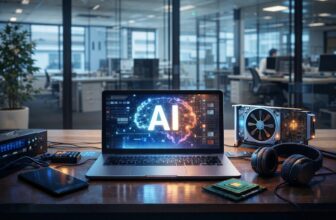

As CES 2026 unfolds in Las Vegas, one pattern is becoming increasingly difficult to ignore: artificial intelligence is no longer being showcased as a feature or add-on-it is being treated as the default foundation of modern technology.
At Guidantech, we’re tracking CES in real time, not just for product announcements, but for the directional signals companies are sending. And across keynotes, booths, and early demos, AI is emerging as the unifying layer connecting consumer electronics, enterprise systems, mobility, and health technology.
This report reflects what CES 2026 is revealing so far, with more developments expected as the event continues.
Event Overview: CES 2026 in Progress
The Consumer Electronics Show (CES) 2026 is currently taking place in Las Vegas, bringing together thousands of exhibitors from across the global technology ecosystem.
From established multinationals to early-stage startups, the show floor reflects a shared priority: moving AI from experimentation to operational deployment.
Unlike previous years where emerging tech competed for attention, CES 2026 feels more focused. Across categories, companies are aligning around practical use cases, efficiency, and scalability – often using AI as the central enabler.
Major Announcements & Product Direction So Far
Rather than headline-grabbing single devices, CES 2026 is shaping up to be a platform-driven year.
AI Computing and Core Infrastructure
Companies such as NVIDIA are using CES to reinforce their role as AI infrastructure providers. The emphasis so far is on platforms designed for edge AI, robotics, and automotive systems-areas where reliability and low latency are critical.
At the same time, AMD and Intel are positioning AI-capable processors for everyday PCs and enterprise devices. The focus is not extreme performance, but local AI execution, signaling a broader move away from constant cloud dependence.
This suggests a future where AI processing increasingly happens on-device, closer to the user and the data.
Smart Homes and Consumer Electronics
On the consumer side, companies like Samsung and LG are presenting smart home ecosystems that rely less on user commands and more on behavioral learning.
So far, the message is clear: smart homes are evolving into intelligent environments. Appliances, displays, and sensors are being designed to anticipate needs, manage energy usage, and reduce friction – often without direct interaction.
This shift marks a move from “connected devices” toward AI-managed living systems.
Mobility and Automotive AI
In the automotive space, CES 2026 has so far avoided bold autonomy promises. Instead, automakers and suppliers are emphasizing AI-powered driver assistance, predictive diagnostics, and in-vehicle intelligence.
The approach reflects a growing industry consensus: incremental intelligence delivers more immediate value than speculative autonomy. Safety, trust, and regulatory alignment are clearly shaping how mobility AI is being positioned this year.
Key Technology Trends Emerging at CES 2026
AI as Invisible Infrastructure
One of the strongest signals from CES so far is that AI is becoming invisible but essential. Rather than being marketed aggressively, it is embedded into chips, operating systems, and workflows.
This matters because embedded AI improves responsiveness, reduces latency, and supports better privacy – key factors for long-term adoption.
Robotics Moving Toward Practical Use
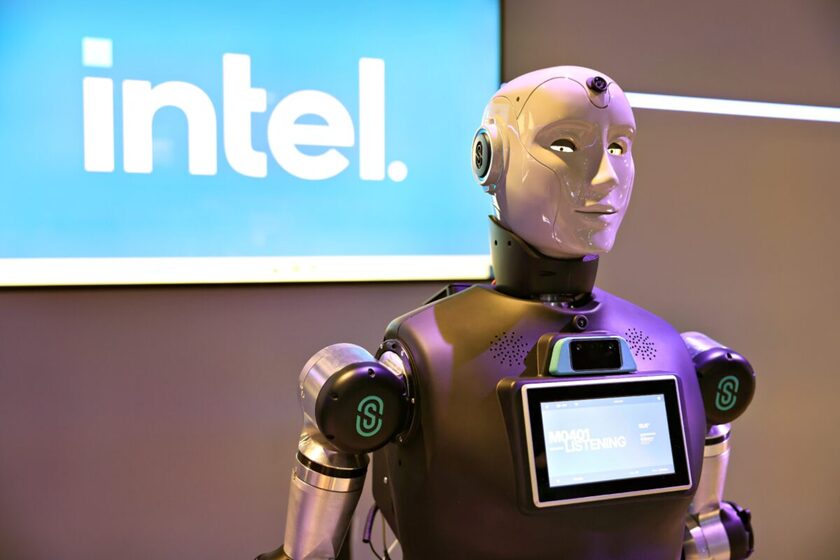
Robotics demonstrations at CES 2026 are showing a noticeable shift toward realistic deployment scenarios. Logistics support, hospitality assistance, and basic home tasks are recurring themes.
While still evolving, these robots suggest that service automation is moving closer to everyday environments, particularly in industries facing labor shortages.
Health Tech Focused on Interpretation, Not Data
Health and wellness technology at CES this year is increasingly focused on insight generation, not just data collection. Wearables and monitoring systems are being positioned as tools for trend detection and early intervention rather than fitness metrics alone.
This direction could bring consumer health tech closer to clinical relevance – while also raising questions about data governance.
Industry Impact: What This Means So Far
For consumers, CES 2026 is signaling a future where technology becomes more adaptive and less intrusive.
For startups, the opportunity lies in deep, vertical AI applications, but the risks of platform dependency and compute costs remain significant.
For enterprises, AI adoption is clearly moving from optional experimentation to operational necessity, with growing attention on governance and compliance.
Early Surprises and Experimental Concepts
Even as practicality dominates, CES 2026 is already surfacing experimental ideas: ambient AI systems that operate passively, alternative human–machine interfaces, and concepts around AI-managed spaces.
These may not reach the market soon, but they indicate where long-term research and investment are heading.
Ongoing Outlook: What to Watch as CES 2026 Continues
As CES 2026 progresses, the key question is no longer whether AI will be integrated, but how responsibly and effectively it will be deployed.
Over the next 12–24 months, competitive advantage will likely favor companies that:
-
Execute reliably rather than promise broadly
-
Balance automation with trust
-
Deliver measurable outcomes, not just innovation narratives
CES 2026 is still unfolding – but one thing is already clear: AI is now the operating layer of the tech industry.
Key Takeaways
-
CES 2026 is positioning AI as core infrastructure
-
Focus is on deployment, efficiency, and integration
-
Smart homes, mobility, robotics, and health are converging around AI
-
Execution, not hype, is defining this CES