
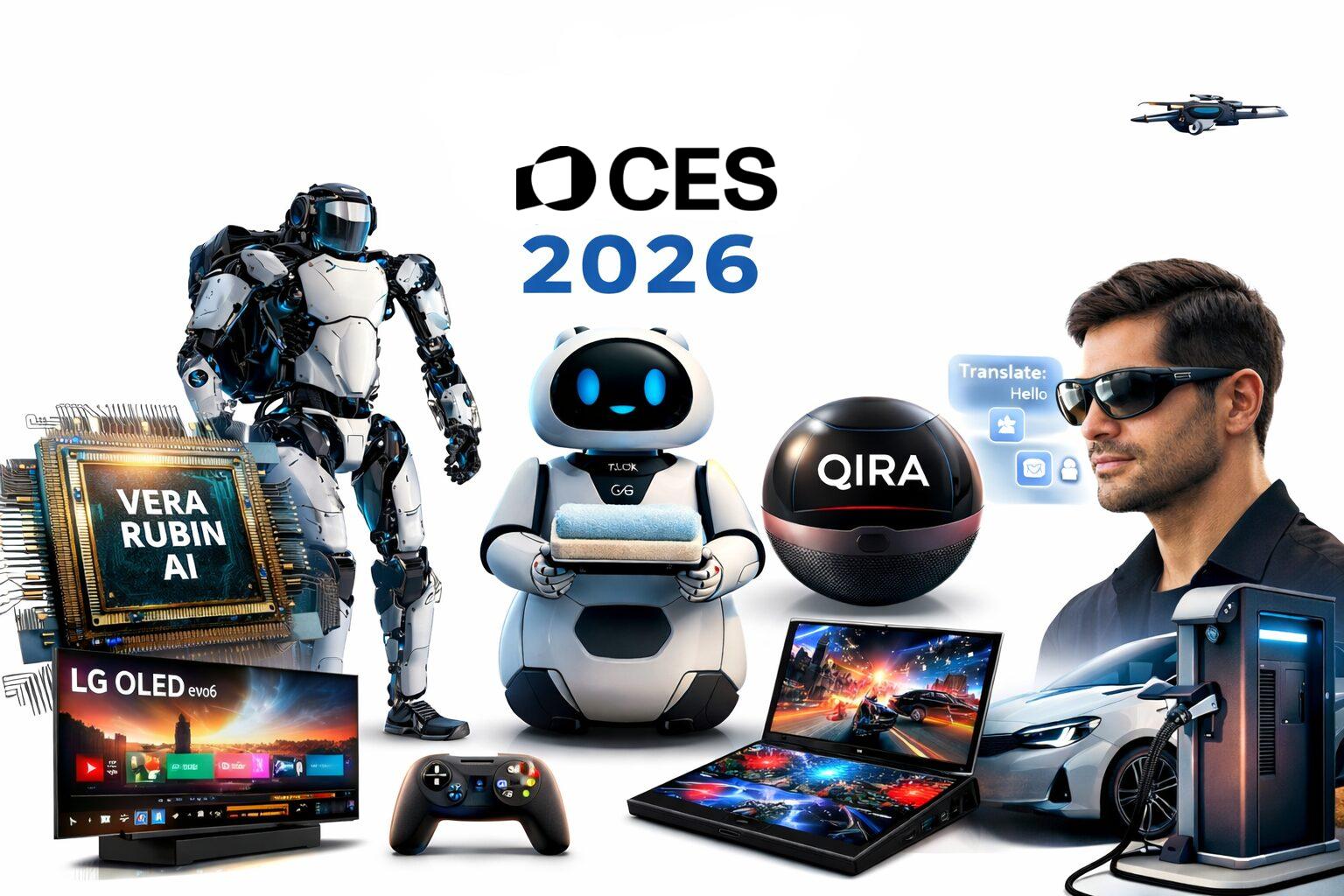
CES has always been a signal event, but CES 2026 felt less like a showcase of possibilities and more like a status report on execution. Walking the show floor in Las Vegas, the difference was noticeable. Fewer exaggerated claims. More working systems. More conversations about deployment timelines, efficiency, and integration than about distant futures.
This shift matters because the technology industry is entering a more disciplined phase. AI is no longer experimental. Robotics is no longer judged by spectacle. Consumer tech is no longer forgiven for friction. CES 2026 reflected an industry under pressure to justify investment with real-world value, especially as businesses and consumers grow more selective.
What follows is not a list of “cool things.” It is an op-ed analysis of what CES 2026 confirmed about where technology is actually heading, backed by specific, named announcements and paired with actionable insights that SMEs, startups, and individuals can use immediately.
1. AI Is Now the Base Layer of the Tech Industry
NVIDIA unveiling its Rubin AI computing platform at CES 2026
NVIDIA framed AI not as a feature, but as infrastructure. Rubin was positioned as the foundation for robotics, autonomous systems, and advanced consumer devices. That framing signals a permanent shift. Products are now expected to be AI-native from the ground up.
Actionable insight:
Audit your current tools and workflows. Identify where AI should be embedded at the core, not added later. For SMEs, this could mean AI-driven customer support or forecasting. For startups, it means designing AI-first architecture from day one.
2. The AI Arms Race Has Shifted From Models to Compute
NVIDIA emphasizing inference speed, efficiency, and scalable deployment
The focus at CES was not on who has the smartest model, but on who can run AI faster, cheaper, and more reliably in real environments. Compute efficiency has become the new competitive edge.
Actionable insight:
Stop chasing every new model release. Instead, evaluate AI tools based on cost, latency, and scalability. Prioritize platforms that balance performance with long-term operational expense.
3. Humanoid Robots Are Being Built for Work, Not Wow
Boston Dynamics and Hyundai demonstrating Atlas for industrial use
Atlas was shown performing controlled, repeatable movements relevant to factories and logistics. The emphasis was stability, not spectacle. This confirms humanoid robots are being engineered for labor environments, not entertainment.
Actionable insight:
If you operate in manufacturing, warehousing, or logistics, begin monitoring robotics pilots now. Even if adoption is not immediate, early awareness will shape future workforce planning.
4. Consumer Robotics Is Being Measured by Usefulness
LG demonstrating its CLOiD home robot handling household tasks
LG avoided companionship narratives and focused on chores. The message was clear: consumer robots must save time or effort to justify their existence.
Actionable insight:
For product builders, anchor robotics ideas around clear, repeatable value. For consumers and businesses, evaluate robots the same way you would appliances: by utility, not novelty.
5. CES 2026 Quietly Ended Some Hype Cycles
Samsung’s Ballie robot absent from the show
Ballie’s absence was telling. CES 2026 showed less tolerance for prolonged concepts without clear paths to scale or adoption.
Actionable insight:
If you are running a product or startup, reassess projects that rely on hype rather than traction. Be willing to pause, pivot, or kill ideas early to conserve resources.
6. AI Assistants Remain an Open Competitive Field
Lenovo launching its Qira AI assistant
Lenovo positioned Qira as a productivity layer across devices, not a gimmick. This signals that AI assistants are still evolving and not locked up by incumbents.
Actionable insight:
Startups should explore niche or domain-specific assistants where context matters more than general intelligence. SMEs can pilot AI assistants to streamline internal workflows before scaling externally.
7. AI Wearables Are Targeting Everyday Use
Solos launching AirGo V2 AI smart glasses
Solos focused on translation, object recognition, and hands-free interaction at an accessible price. These were framed as daily tools, not experiments.
Actionable insight:
Begin thinking beyond screens. For individuals, explore skills that adapt to voice and visual interfaces. For businesses, consider how wearable-first experiences could reduce friction in field work, support, or accessibility.
8. Gaming Hardware Is Shaping the Future of PCs
ASUS ROG unveiling AI-optimized, dual-screen gaming laptops
Gaming systems are now proving grounds for AI performance, thermal design, and interface experimentation. These innovations often move into mainstream computing next.
Actionable insight:
Watch gaming hardware trends even if you are not a gamer. Creators, developers, and tech buyers can use gaming advancements as early indicators of broader PC evolution.
9. TVs Are Becoming Intelligent Computing Platforms
LG announcing OLED evo G6 TVs with cloud gaming and adaptive modes
The focus shifted from display specs to software-driven experiences. TVs are being positioned as multi-purpose computing surfaces, not passive screens.
Actionable insight:
Content creators and app developers should start treating TVs as interactive platforms. Businesses targeting households should rethink how services fit into living-room environments.
10. CES 2026 Was About Optimization, Not Disruption
Overall exhibitor tone and messaging led by the Consumer Technology Association
Very few companies promised to “change everything.” Most focused on refinement, integration, and reliability. This signals a maturing industry prioritizing sustainable progress.
Actionable insight:
Shift strategy from chasing disruption to improving execution. Focus on making existing products faster, simpler, and more reliable before attempting radical reinvention.
Final Words
CES 2026 confirmed that technology is growing up. AI is assumed. Robotics is judged by usefulness. Consumer devices are evaluated by how seamlessly they fit into real life. The companies that stood out were not the loudest, but the most deliberate. Over the next few years, success will belong to those who build quietly, execute consistently, and solve real problems well.